Highland English teacher Emily Jones is in possession of an ancient relic. It was discovered in the crevice of an old closet, carefully dusted off, and is now held in the same reverence as the Mona Lisa and the Rosetta Stone.
This small piece of laminated plastic is one of the last remaining pieces of evidence of a long-forgotten ritual where people used to congregate and hunt, hoping for the perfect way to spend the night. It represents the time-forgotten tradition of going to a video store.
Jones’ Blockbuster Video card is an artifact from a time before streaming, before movie tickets were $16 a piece, and when the movies were still revered as experiences.
This was before Disney Plus and Amazon, before a whole Oscar’s season of films could be viewed from a pocket-sized computer. The big screen was still a rare and coveted experience. For many raised in the 1980s and 1990s, a movie theater was an uncommon treat, and most movies came from video aisles in grocery or department stores.
The real holy grail for cinema lovers of the late 20th century were the video stores like Blockbuster. Hollywood, or West Coast Video, with aisles of VHS tapes available for rent or buy. Mostly available that is, as limited copies of movies were shipped to each store. People were often left waiting on a movie they desperately wanted, scouring the recently returned bin at the store. Neighborhood kids would spend hours camped outside the local Blockbuster, waiting for someone to turn in a copy of Ghostbusters or E.T.
“You would go to the video store and hope that they had what you wanted, and if they didn’t you were up at the counter looking through the returns,” Jones said.
This concept of renting or buying a physical movie stuck around into the 2000s. Netflix even got its start as a DVD renting service! Even teens of today will probably recall wiping off the surface of disc with the edge of their shirt or hoping that they haven’t scratched their copy of their favorite film.
The overall movie-going experience of this time involved a lot of waiting, whether that was begging the Blockbuster worker to relinquish the newly returned copy of a film or shivering in line outside of a theater. Before the internet, people went to the theater hoping that tickets were available.
The first movie theater opened in New Orleans, Louisiana in 1896. It was a small venue converted from a vacant store front and only showed two silent films a day for a dime per showing. Since that day, the movie industry has only grown. Theaters popped up all over the country in the next few decades, each one more advanced and modern than the last. And with each new opening came larger crowds of people, all eager to engage in the miracle of cinema.
Back then, movie going was not just an activity, but an event. In the early 1900s, seeing a 10-cent movie was a rare treat for the few lucky enough to live close to a theater. This meant the movies were coveted, with pictures staying in theaters for months on end and Hollywood constantly farming for new advancements. The oldest generation will remember that era, with black and white news reels of Normandy’s beaches playing before films like Casablanca or National Velvet.
“Back in my parent’s day, it was more formal; they dressed up to go to movies,” Highland science teacher Doug Jorgensen said. “It was a big deal back then to go see a show.”
That began to change as the century wore on, technological advancements and increased accessibility made movies more popular by the time the ‘70s rolled around. With these advancements came the ability to make bigger, brighter and more exciting movies.
Movies like Jaws, Star Wars and Indiana Jones are the type of film that Jorgensen and many others of his generation remember watching on the big screen. They would wait in line for hours, make plans with friends for the exact showing they would see and anticipating the show for days.
“I remember standing line for maybe an hour to get in to see the big movie Jaws,” Jorgensen said.
And while the names of these movies may be familiar, the experience is not. Back then, there weren’t reclining chairs or giant cupholders; there wasn’t even assigned seating. Today, theaters have clean floors and guaranteed grouped seating, but even just 15 years ago, it was a wrestling match for people to be able to sit next to their friends in a dirty theater with ripped-up seats and stale popcorn everywhere.
“You walk in, and your feet stick to the floor,” Jorgensen said while mimicking the sound of shoes sticking to a candy covered floor, “and there’s popcorn everywhere!”
The theater was the only option to see a popular movie before streaming. Thus, people were forced to put up with these nasty conditions if they wanted to be in on the latest hit,
Movie theaters retained their lower comfort levels into the early 2000s, paired with lower ticket prices. But with the introduction of streaming services came the closing of many theaters. Why would people go to a dingy theater when they can watch a movie on their couch for half the price? This thinking changed the way that theaters operated, with many closing all over the country and those that remained open shifting to a more luxury experience. This was the birth of the reclining chair, tray table and snack delivery experience of the modern era.
“The theaters themselves are so much nicer now. I like that you can pick your seat and that they’re actually comfortable seats,” Jones said.
Today, the movie experience is more expensive, but comes with reclining seats, clean floors and the ability to pick seats well in advance. But Jones will never forget the scavenger hunt of looking for a movie to watch in a crowded movie store.
And she has the card to prove it.
Eras Of Entertainment
The Rambler Explores Changes In Attending Movies Throughout The Last Five Generations
December 19, 2025

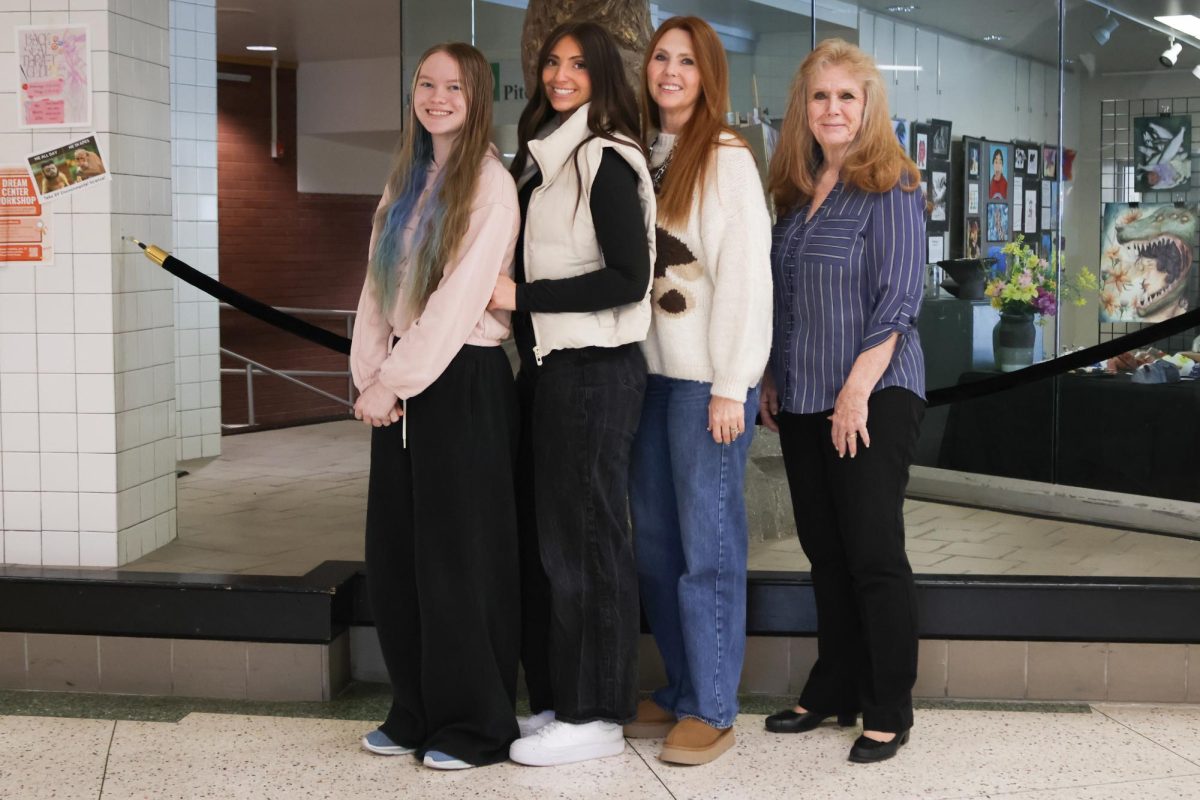
Highland teacher, Emily Jones, holds her prized blockbuster video card.
More to Discover