Most Americans read articles, watch the news or learn about the events in Palestine on social media, but Salwa Yacoub can’t help but wince at the inaccuracy of these sources. She receives her news from her family who lives in a small town called Anabta in West Bank, Palestine. The town is located between Tulkarm and Nablus, which are two politically active cities.
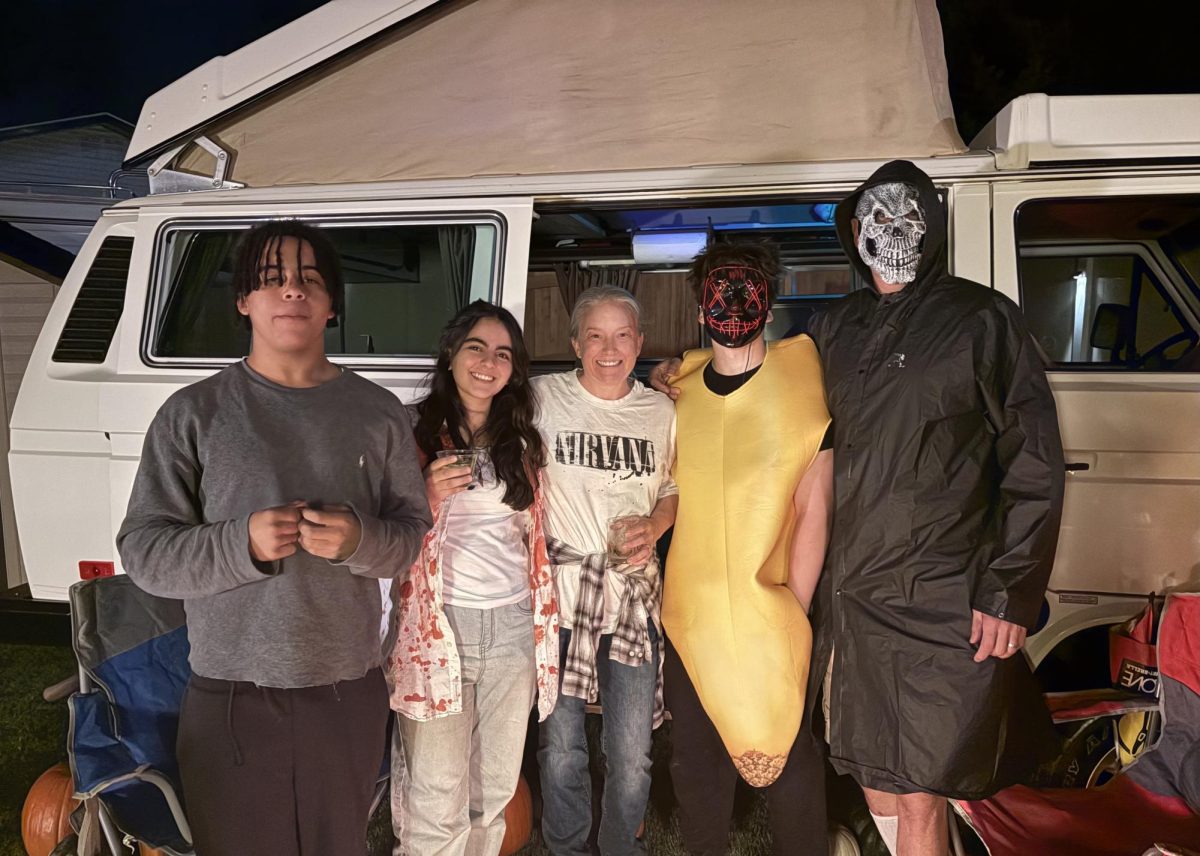
Yacoub is an exchange student at Highland. Yacoub arrived in Utah on August 22nd, and is living with her host family, the Harbs. Tyler and Nolan Harb, Yacoub’s host brothers, are both students at Highland.
She came to Highland through the Kennedy-Lugar Youth Exchange and Study Program (YES) on a scholarship. The acceptance rate is about 3%, but after completing a series of exams, essays, and interviews, Yacoub was accepted.
After living in both places, Yacoub has been able to notice the differences of life in America versus life in Palestine, specifically the educational aspect.
“It is so different you can’t even compare, but here you have a lot more freedom,” Yacoub said. “For example, I could just skip class, but you could not do that back home.”
In America, every student gets to choose the classes they take and the amount of work they put into their education, but they are given specific guidelines. In Palestine, every student has the exact same schedule that is chosen for them. They do not have a choice in their school. Yacoub prefers American education system.
Another difference between America and Palestine is their politics. In Palestine, there has been an occupation since 1948, which means Israel has control over the West Bank in Palestine. This means that Israel maintains a military presence that enforces rules and policies that limit Palestinian freedom. Yacoub has experienced firsthand the effects and the rules under the occupation.
“Every day is different, specifically with occupation. There is no assuming how your day will go,” Yacoub said.
An ordinary day for Yacoub would involve going to school, doing schoolwork, and hanging out with friends and family. On other days, Israel’s IDF would raid the towns which changes the course of her day.
Yacoub explained that the raids were for no reason. The IDF wanted to show their power and that they can control the people of Palestine. The raids would include shooting people or just shooting in the air, destroying houses, and arresting people without reason.
After living here, she has realized that American’s are not fully aware of the situations in Palestine, even if they stay caught up with the news.
“They (news and media) are really, really biased, and they do not tell the full story,” Yacoub said. “If they tell a story, they do not put all the actual details in it. They make it sound so simple and like it is not that big of a deal when it is.”
Yacoub believes the inaccuracy of American news sources had led to many assumptions and false observations about the situation in Palestine. Depending on the source of news and the form of news, there is bias, false claims, opinion, and dehumanization that does not teach people the truth about the war. Yacoub has had a few misunderstandings about her just because she is from Palestine.
An example of these misunderstandings is the assumption of where Yacoub lives and the amount of danger she was in. Everyone assumes she lives on the Gaza strip, since that is the biggest news covered city in Palestine.
Yacoub lives in a small town which means that Yacoub’s family is not in immediate danger, and they are relatively safe because of where they live in Palestine. Some of her extended family lives in bigger cities, which does put them at a greater risk.
Most people in America are not surrounded by information about Palestine and the war super often, which makes the gravity of the situation smaller to them. Yacoub has noticed that since they do not understand the situation, it has resulted in racist jokes, stories and exaggerations.
“Some people like to make racist jokes and then think it’s funny when it’s not,” Yacoub said. “I just try not to let it get to me; other people would probably be offended.”
After experiencing life in America, Yacoub will return home to Anabta in June. She has bittersweet feelings about returning to Palestine at the end of this school year.
Despite the uncertainty of daily life, Yacoub loves the beauty and home that Palestine represents. She believes it will be hard giving up all the freedom in America, life here is a lot easier for her than in Palestine.
“I love my friends, my teachers and my host family too,” Yacoub said. “It is going to be really hard to say goodbye, but it is also exciting because I get to see my family again.”
Yacoub wants everyone in America that she’s met to remember that she is a person living in Palestine, not just a headline of an article.