Helicopter blades whacked the air violently above her house, camouflaging the destructive power held inside. Mayada Alabadi, just nine years old at the time, stood on her roof, watching them fly above. Mayada lived in Baghdad, Iraq, right next to a military airport. She waved, saying “hi” to the Iraqi forces above. Then realization hit. They were enemy helicopters from Iran. It was the Iran-Iraq war, an armed conflict that lasted from September 1980 to August 1988.
“My father said, ‘Go, go, go inside! It’s Iran’s.’ And every time when the sun set, we had to turn all the lights off because any light would be bombed by the helicopter. This continued for eight years,” Alabadi said. “We were just kids, so we were afraid.”
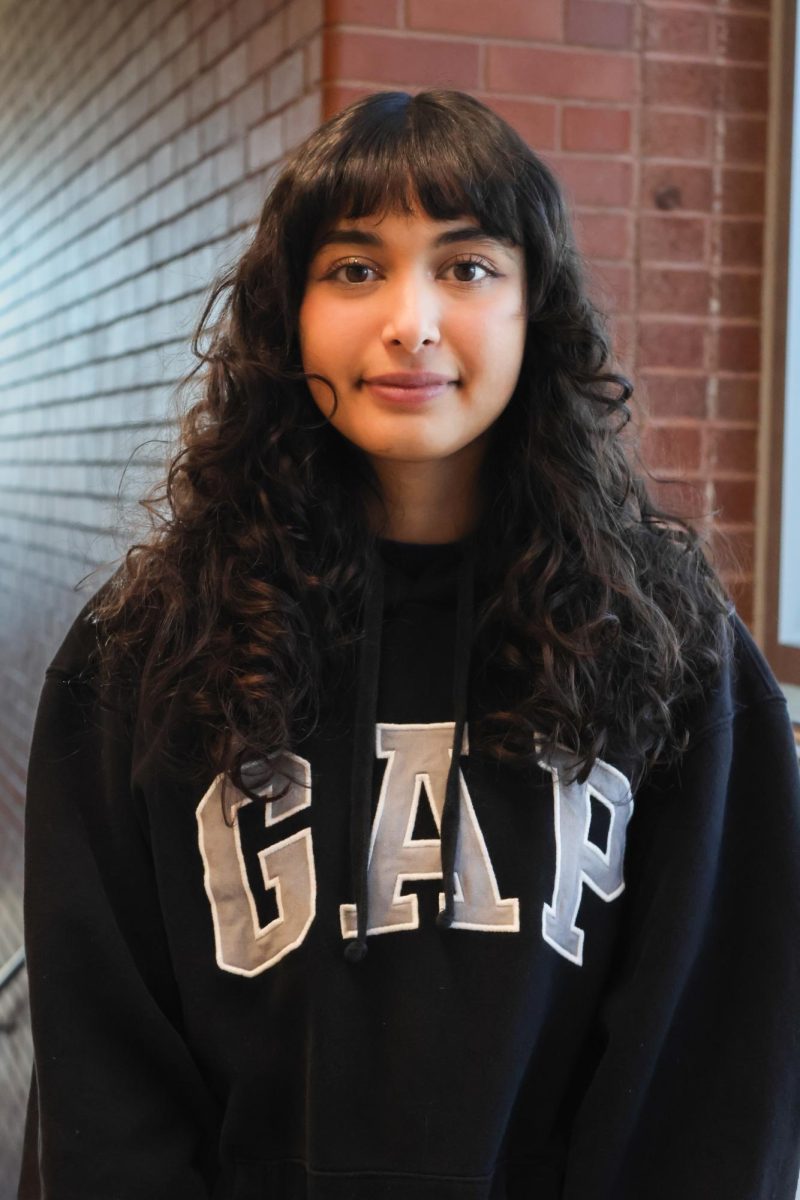
Dania Najam, Alabadi’s daughter and a sophomore at Highland, has grown up without knowing most of her mom’s story, a tough topic that brings back bad memories. Despite not knowing many details about her mom’s earlier experiences, she knows how lucky she is to be living in a country like America. Najami recognizes how far her and her mom have come, but it’s important to remember what led them to America in the first place.
After the UN-brokered a cease-fire on August 20th, the conflict ended, which left Iraq financially strained and heavily armed. This led to the invasion of Kuwait on August 2, 1990, as Iraqi President Saddam Hussein sought to control its oil reserves to help pay off the war debt.
“We just woke up in the morning and they said, ‘we took Kuwait and now it belongs to Iraq,’” Alabadi said. “And then in 1991, we have the [Gulf] war. And this is terrifying because my family’s house is near the military airport, and they bombed it. All the windows were broken, all the doors were broken.”
Alabadi and her family have ambivalent opinions about Hussein. On one hand, life under him had state-provided benefits like free university education and some religious freedom. However, it also had severe repression, torture, and violence. His regime did not allow freedom of speech, and cracked down on dissent through widespread fear, unwarranted arrests, and brutal violence. This led to many deaths and human rights abuses.
“Before 2003, it was a good life at that time. But we were afraid of Saddam. We were afraid to speak bad about him because if somebody listened to you and you spoke about Saddam, they would go to the police, and sometimes they would take you and bad things happen. Everybody was afraid at that time,” Alabadi said. “But the life was a little bit good. We had our school, our college, our hospitals, all was free. All the family was there, and no one [in our family] was outside of Iraq.”
Then, Alabadi started going to Mustansiriyah University. At the time, university was required for most people. There, she studied at the college of science, in the math department, despite not wanting to, but not having a choice. She dreamt of a future different from hers, where her daughter could have the freedom to make her own decisions about her future.
Alabadi carried these dreams to America and actively encourages Najam to study what she wants and to pursue her goals, instead of majoring in a topic that she doesn’t enjoy.
“She wants me to get into a good college, find a nice job, and be happy,” Najam said. “She encourages me to go to a college that I actually want to go to, because she went into math, and she didn’t want to go into math. She wants me to live my life how I want.”
After Alabadi finished college, the United States invaded Iraq in 2003 with the purpose of dismantling Hussein’s regime and destroying alleged weapons of mass destruction. The initial military campaign culminated in the fall of Baghdad, the city Alabadi lived in, on April 9.
“After the military invaded Iraq, it turned very dangerous,” Najam said. “There was the Sunni and Shi’a thing and basically, they would fight and there were posters. People would spray paint on people’s wall, like ‘get out, leave!’ Like, ‘we’re going to kill you.’ There were many kidnappings, and many things for money.”
After the fall of Hussein’s regime, Iraq experienced a lack of governing power, which led to widespread violence and division. Noticing the increasing danger, Alabadi immigrated to Jordan, getting out of Iraq before the civil war began.
“I was 33 when [my husband and] I left Iraq, so we left everything. We left our house, and then we went to Jordan. Jordan is not too far from Iraq, so with the car, it was just 10 hours. The first week, we thought we could come back after months or one year,” Alabadi said. “But the things went so bad [that] we couldn’t return. It is hard to leave your country and start in another country, especially when there is nobody there.”
Alabadi was the first in her family to leave Iraq. She and her husband stayed in Amman, the capital of Jordan, where she gave birth to Najam in 2009. Alabadi lived there from 2003-2011.
“[Our lives] are definitely different. My mom dealt with so many issues. I’m just taking life on easy, and she went through so much. She struggled to go to school there, and I am so grateful to be here,” Najam said. “She left her home country behind, which she probably didn’t want to do, and I’m very grateful.”
At the time of Alabadi’s immigration, Jordan had few Iraqi people, and Alabadi felt isolated. As turmoil and danger in Iraq increased, it pushed more Iraqi people into Jordan and other countries, seeking asylum. By then, Alabadi and her family had a lot of friends and fellow Iraqi families there.
“After 2003, it started a civil war between two groups in Iraq. We are two groups of Muslims. They call them Shi’a and Sunni. We [all] lived together at that time,” Alabadi said. “My mom is Sunni and my dad is Shi’a, so it didn’t matter [to us]. But after the war [with the US], somebody came from outside of Iraq and killed Shi’a and they said that the Sunni killed the Shi’a, but it wasn’t true.”
The civil war began in February of 2006, when Al-Qaeda in Iraq bombed the Al-Askari Mosque, a sacred site for Shi’a Muslims. The bombing led to widespread attacks on Shi’a civilians, which sparked further retaliatory attacks on Sunni, further increasing violence and fear.
“My nephew was kidnapped, and they paid 20,000 dollars for the ransom. They threatened a lot of my sisters,” Alabadi said. “So, [my sisters] left. Me and my sister [ended up in] Jordan, and then [she went] to Dubai. My other brother went to Italy, and another went to Australia. We are seven [siblings], so each one was in a different country.”
To this day, they remain separated in different countries.
“It makes me feel sad, because she can’t see all of her family. [They] were all just separated, and everyone’s all scattered,” Najam said. “We have a few aunts here, but she still feels lonely that everyone isn’t here, and I wish that everyone was.”
In March of 2011, the Syrian civil war began, causing anxiety in neighboring regions. Egypt saw a period of unrest during this time as well, which happened after the killing of Khaled Said by police in June 2010, which led to anti-government sentiment.
Due to the growing unrest in Syria and Egypt, Alabadi was afraid of something happening in Jordan. When deciding about plans for the future, Alabadi recalled that her cousin had married a woman from Utah. So, when Alabadi decided to immigrate to the US, she decided to come to Utah, because they were the only people that she knew.
The first year in America was difficult for Alabadi, but after the government accepted her application for asylum, life was easier. However, Najam’s transition to America had its own challenges.
“Growing up, it was hard trying to fit in, and I was basically the only person of color in my school. It was kind of hard because people would make fun of the food, the culture. Just growing up realizing that you’re obviously going to be different, but there are a lot of people who don’t care about that stuff,” Najam said. “Especially growing up, when I was younger, I always tried to fit in, wanting to be white, wanting to dye my hair blonde. Now, I’m happy with my culture, I can express it, I can show where I’m from, [and] I’m not ashamed like I was.”
Because of her mom’s strength and perseverance, Najam has opportunities and experiences that her mom had always dreamt for her.
“It makes me feel great. I can talk about my opinions, [and] I’m not scared to speak out like she was,” Najam said. “I’m glad I can speak out [knowing] she couldn’t, like I can speak for her voice. I don’t think she wants me to be quiet about my opinions, she wants them to be heard.”