“We want ICE off our streets!”
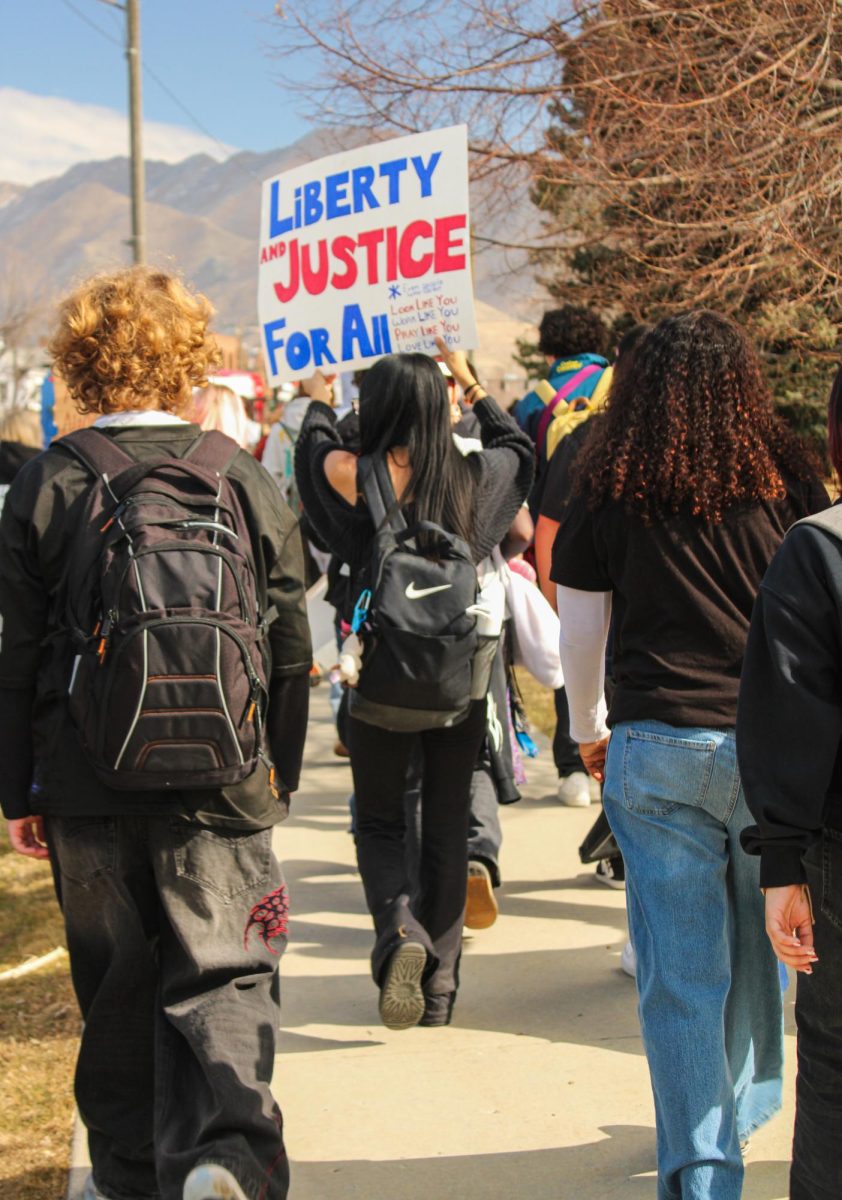
Students from Highland joined a state-wide protest on Feb. 6 and walked out of school chanting and holding signs in protest of the Immigration and Customs Enforcement (ICE).
At 11:20 a.m., an estimated 300 students left their classes at Highland and gathered outside of the school. After speeches at Sugar House Park, students continued marching down 2100 South and along 1300 East before gathering on both sides of the I-15 overpass.
Students held signs with message such as: “We need snow not ICE;” “Prison without due process is a concentration camp;” and “The wrong ICE is melting.”
Following the deaths in Minnesota of Renee Good and Alex Pretti, along with months of mass deportations, many have gathered across the United States in support of anti-ICE campaigns.
Many in Salt Lake City have followed suit.
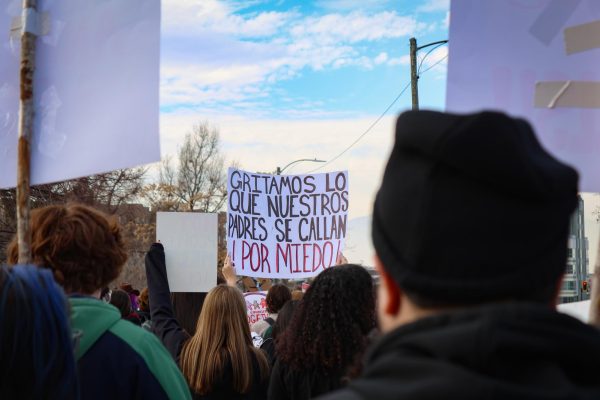
With the January 10 protest at Washington Square Park, January 25 protest in downtown Salt Lake City, and the nationwide shutdown on January 30 (attracting many supporting businesses, students, and workers), the demonstration on February 6 was not the first of its kind in recent weeks. Highland senior Erin Holt-Sandoval was one of the organizers of the student event and worked with other Salt Lake City high schools, including West, East, Olympus, Skyline, Brighton, Cottonwood, and others to obtain as many supporters as possible.
Holt-Sandoval is the president of Hispanics of Highland and organized Highland’s participation in the walkout. Betty Taylor, of Cottonwood High School, came up with the idea of the widespread protest and communicated with leaders from other schools in the area to broaden the demonstration. Together, these students worked until 15 participating schools across Utah had officially joined the campaign.
Tirelessly working to ensure that the walkout maintained harmless by organizing routes and safety measures, Holt-Sandoval’s primary goal, in addition to getting as much involvement as possible, was to ensure safety for all involved.
“Seeing our communities represented and protected by so many students… seeing that people care, especially that the future generation cares, means a lot,” Holt-Sandoval said.
The goal was initially to have participating schools meet together, but the organizers decided it was not viable as they aimed to have students back at school in a timely manner.
The demonstration remained peaceful throughout the entirety of the walkout. While students were met with pro-ICE cheering from some of the passing cars and other drivers using derogatory symbols (including one man who circled the protesters in his car while displaying a confederate flag), students stayed calm.
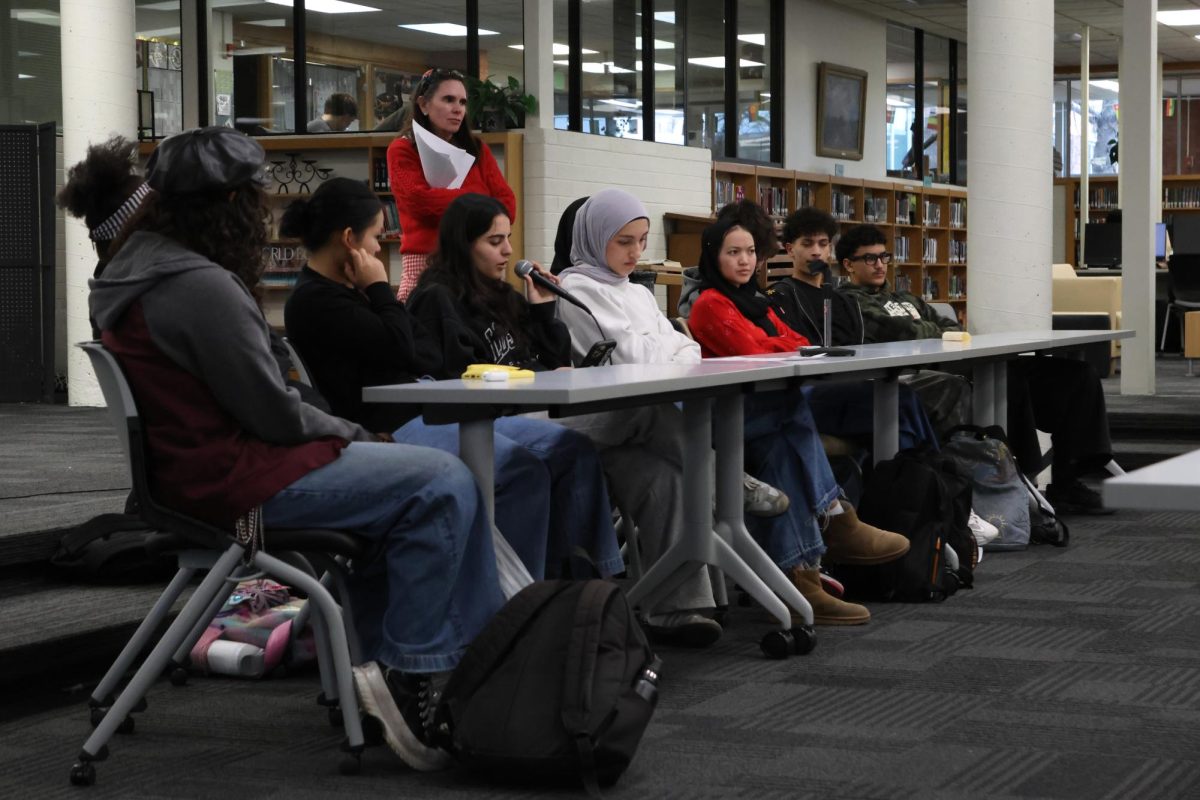
The most emotional part of the walkout occurred during the gathering at Sugar House Park as different students at Highland spoke about their personal experiences. Student speakers represented members of the Black Student Union, children of immigrants, and even first-generation immigrants.
“The intersections between the Black community and immigrant communities are uncountable, in culture, in fights, and in people,” Highland senior Takarah Parker said to the crowd. “So, when they come for one of us, they come for all of us. The people they are after are not illegal criminals, they are your friends, your neighbors, your teachers, your cousins.”
In addition to the demonstrations held in Salt Lake, various schools across the state of Utah have also shown their support, and February 6 has become one of the largest students-led protests in Utah in recent years as part of the No Kings Campaign.
“[We need] a powerful population,” Ivy Marquardt said in surprise to the number of students present at Highland’s march. “If we show up in large groups, we show that this is not what the general public wants.”
The Salt Lake City School District did not officially endorse the student walkout and posted on social media, and in an email to parents, that it is concerned about students missing class.
“For the second Friday in a row, many students across the district have left school during the school day to participate in local demonstrations,” the message read. “Missing school has a negative impact on their education. While an occasional absence may not seem significant, every missed class period is a missed opportunity for learning.”
Many students addressed their discouragement at the district’s announcement, viewing a missed class period worth the potential consequences.
“They missed our point,” Holt-Sandoval said, pointing out with frustration that students miss more time for sports and activities. “They spoke on attendance rather than addressing why we walked out.”
While disappointed with the district’s response, many students said they were pleased to have gathered attention, and hope the movement inspires change.